What lies behind these letters?
Polydeoxyribonucleotides (PDRN) are small fragments of highly purified DNA molecules obtained from salmon milk or plants.
This component has come a long way to end up on the shelves of cosmetic stores and prove its effectiveness to us. Initially, it was used in medicine as an ingredient in regenerative ointments (for healing burns and wounds). Then PDRN began to be used in injection cosmetology as a rejuvenating agent that has regenerative, antioxidant, and moisturizing properties, as well as increases skin density. Now it can be found in cosmetic clinics as the basis for meso cocktails.
Why were these sources of raw materials chosen?
When it comes to salmon PDRN, its main features are its similarity to human DNA (95% nucleotide similarity), safety, high concentration of DNA molecules in the raw material, and proven effectiveness over many years.
As for plant-based PDRN, it is extracted from any plant. One of the first plants that started the era of plant-based PDRN was ginseng. An interesting fact: depending on the plant, new properties can be added to the cosmetic active ingredient. For example, PDRN from roses additionally gives the skin a glow, while PDRN from ginseng promotes a lifting effect.
These components will be listed identically on the label as Sodium DNA. The manufacturer may indicate the source of the active ingredient in order to describe its properties in more detail.
Benefits of PDRN:
PDRN is a versatile ingredient that can have a positive effect starting at age 20. It helps slow down the first signs of skin changes and improves the condition of skin with signs of aging.
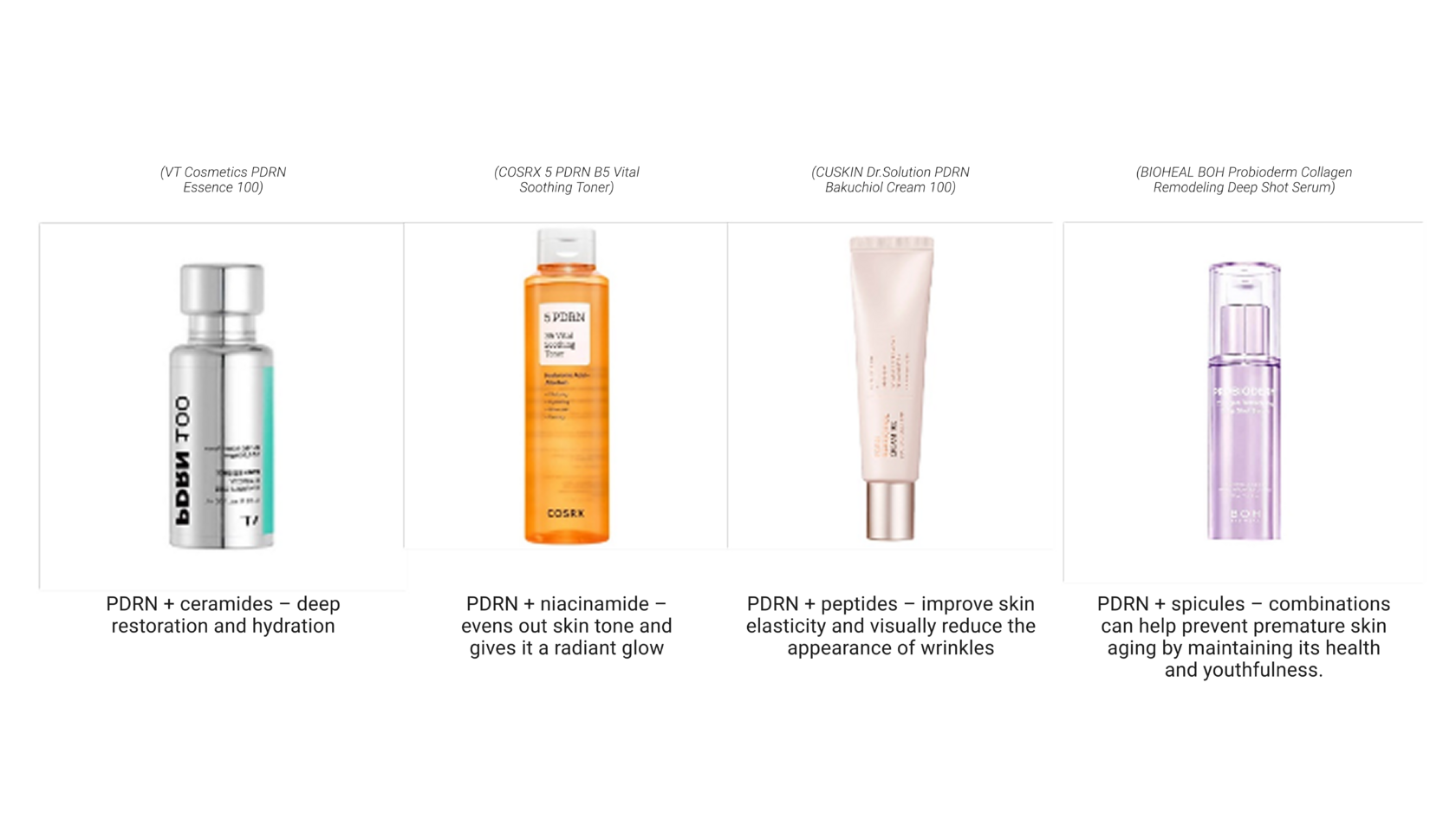
PDRN will have a more pronounced effect when combined with other powerful active ingredients (see photo).
This article was prepared by Anastasia Danilova, a cosmetics technologist.
Polydeoxyribonucleotides (PDRN) are small fragments of highly purified DNA molecules obtained from salmon milk or plants.
This component has come a long way to end up on the shelves of cosmetic stores and prove its effectiveness to us. Initially, it was used in medicine as an ingredient in regenerative ointments (for healing burns and wounds). Then PDRN began to be used in injection cosmetology as a rejuvenating agent that has regenerative, antioxidant, and moisturizing properties, as well as increases skin density. Now it can be found in cosmetic clinics as the basis for meso cocktails.
Why were these sources of raw materials chosen?
When it comes to salmon PDRN, its main features are its similarity to human DNA (95% nucleotide similarity), safety, high concentration of DNA molecules in the raw material, and proven effectiveness over many years.
As for plant-based PDRN, it is extracted from any plant. One of the first plants that started the era of plant-based PDRN was ginseng. An interesting fact: depending on the plant, new properties can be added to the cosmetic active ingredient. For example, PDRN from roses additionally gives the skin a glow, while PDRN from ginseng promotes a lifting effect.
These components will be listed identically on the label as Sodium DNA. The manufacturer may indicate the source of the active ingredient in order to describe its properties in more detail.
Benefits of PDRN:
- Synthesis of collagen and elastin – components responsible for skin elasticity and density
- Moisturization, giving the skin a healthy, radiant appearance and, in particular, making fine wrinkles less noticeable
- Slowing down premature aging due to antioxidant properties
- Skin restoration when using more aggressive active ingredients (retinol or acids) in skincare or healing post-acne marks
PDRN is a versatile ingredient that can have a positive effect starting at age 20. It helps slow down the first signs of skin changes and improves the condition of skin with signs of aging.
PDRN will have a more pronounced effect when combined with other powerful active ingredients (see photo).
This article was prepared by Anastasia Danilova, a cosmetics technologist.